FDA OTC monograph · corneal edema

Muro 128 Hypertonic Saline Solution & Ointment

Waking up with your eyelid stuck to the cornea? Muro 128 delivers FDA-monograph temporary relief of corneal edema, rated 4.7★ across 22,047 verified reviews.

  • 5% sodium chloride: daytime drops, overnight ointment
  • Thimerosal-free across every bottle and tube
  • Standard retailer return window applies
Muro 128 eye drop bottle and ointment tube on a bathroom vanity in morning light
4.7★average across 22,047 verified reviews
5%sodium chloride, bottle and tube alike
Since 1986made without a break by Bausch + Lomb
0mercurial compounds such as Thimerosal

Solution bottles and ointment tubes

Solution bottles and ointment tubes, all carrying the same 5% sodium chloride strength in single and twin-pack sizes.

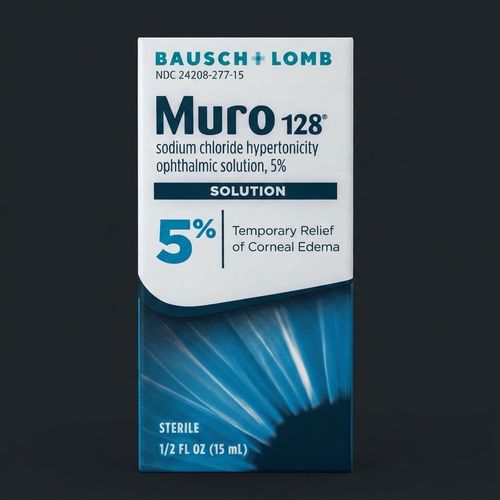
Muro 128 5% Sodium Chloride Solution, 0.5 fl oz

Muro 128 5% Sodium Chloride Solution, 0.5 fl oz

4.7 (9,500 reviews)

Morning haze sits over your reading glasses until the first drop goes in: 1 to 2 drops of 5% sodium chloride in the affected eye, every 3 to 4 hours or as your doctor directs. Tilt the 15 mL bottle over the lower lid and the salt draws fluid out of the swollen epithelium while your coffee cools, because it runs saltier than the fluid trapped inside the cornea. Where a plain lubricating drop wets the surface and evaporates by the next blink, this bottle answers the one thing the label names: temporary relief of corneal edema. Keep it as the daytime entry point, and the standard retailer return window covers a first bottle that turns out wrong; check today's price.

  • Two drops at 8 a.m. and two more before lunch keep the haze off your screen through a workday
  • A drop spreads across the tear film in one blink, so dosing lands every 3 to 4 hours without a lie-down
  • Send a first bottle back inside the standard retailer return window if the drops turn out wrong
Check today's price
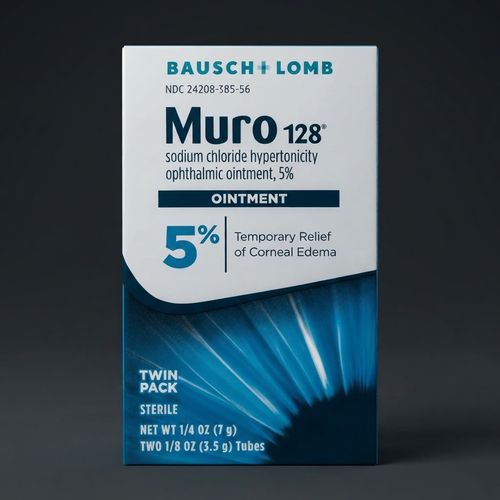
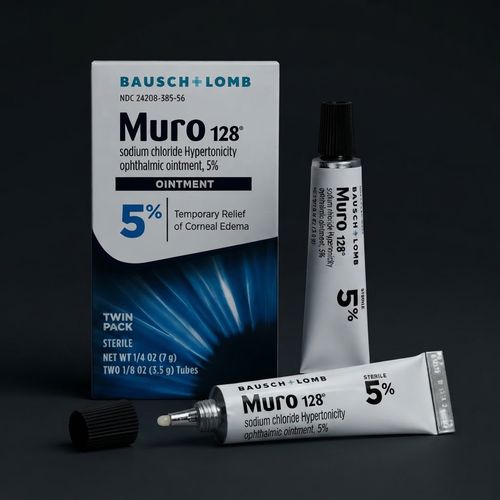
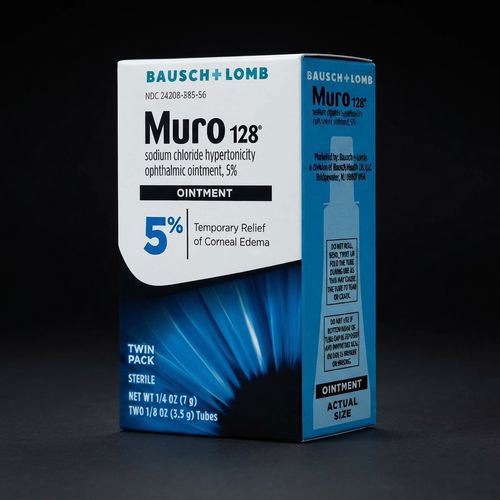
Muro 128 5% Ophthalmic Ointment Twin Pack, 2 x 0.125 oz

Muro 128 5% Ophthalmic Ointment Twin Pack, 2 x 0.125 oz

4.7 (2,757 reviews)

Lay the ribbon inside the lower lid, close your eyes for a minute, and the coat holds until morning: a twin-pack of 0.125 oz tubes, 7 g of 5% sodium chloride ophthalmic ointment in total. The barrier holds because ointment stays where a watery drop drains, keeping a dry lid from gripping the healing corneal epithelium at 3 a.m. Where plain lubricating ointments only wet the surface, this one also draws fluid out of swollen tissue under its FDA monograph indication. The second tube comes out of the box around the month the first one thins out, and the standard retailer return window covers a first twin-pack; check today's price.

  • A thin ribbon at bedtime keeps the lid off the cornea until you wake
  • The ribbon does its work behind a closed eye, so bedtime is the slot where an hour of fog costs nothing
  • Send a first twin-pack back inside the standard retailer return window if the ointment does not suit your nights
Check today's price
Muro 128 5% Corneal Edema Ointment, 0.25 oz pair

Muro 128 5% Corneal Edema Ointment, 0.25 oz pair

4.7 (776 reviews)

Buying the same small tube every six weeks gets old, which is what the 0.25 oz size answers: the largest ointment tube here, sold as a pair. Squeeze the same 5% ribbon along the lower lid at bedtime, every 3 to 4 hours or as directed by a doctor, and a fuller tube runs weeks longer behind the cap. Where a trial-size tube runs dry mid-month, this pair carries a nightly routine deep into the season. Reviewers reach for it as the restock size once a routine has settled, and the standard retailer return window applies to a first pair; check today's price.

  • Squeeze a nightly ribbon from the 0.25 oz tube and it is still going weeks after a trial tube would have run dry
  • Uncap the second tube in the pair and the ribbon behaves as the first did, since a fuller tube changes duration and not dose
  • Return a first pair inside the standard retailer window if the larger size sits unused on the shelf
Check today's price
Muro 128 5% Eye Ointment Twin Pack, 2 x 3.5 g

Muro 128 5% Eye Ointment Twin Pack, 2 x 3.5 g

4.7 (4,249 reviews)

Thirty years of nightly use turns up in these reviews, which is the kind of run this twin-pack gets bought for: two 3.5 g tubes of 5% sodium chloride ophthalmic ointment. The ribbon sits in the lower lid pocket through the night, so the eyelid slides over the cornea at waking instead of catching the healing epithelium. Where a daytime drop drains within minutes, ointment stays put until morning, which is also why it blurs vision for about an hour. Bausch + Lomb states no mercurial compounds such as Thimerosal, and the standard retailer return window applies. Check today's price.

  • Two 3.5 g tubes carry a nightly bedtime ribbon through months of use
  • The ointment vehicle holds position overnight, which is why vision blurs for about an hour
  • 4.7★ across 4,249 verified buyer reviews on this twin-pack
Check today's price
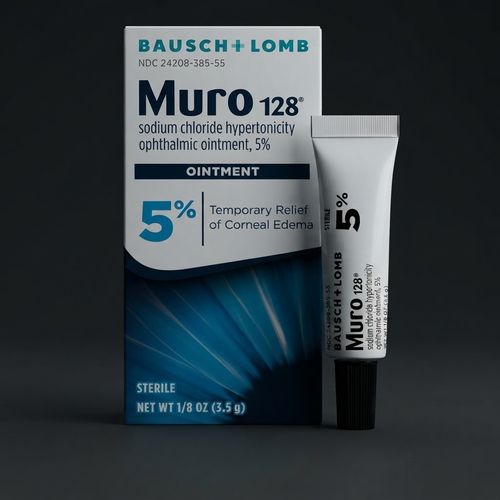
Muro 128 5% Eye Ointment, 0.12 oz tube

Muro 128 5% Eye Ointment, 0.12 oz tube

4.6 (3,055 reviews)

Trying a bedtime ointment for the first time does not need a two-tube commitment: 0.12 oz of 5% sodium chloride ophthalmic ointment in one tube, enough to test the routine for weeks. A thin ribbon inside the lower lid at bedtime forms the barrier, because the ointment holds position while a lubricating drop drains within minutes. Where a full twin-pack ties you to a format before you know it suits you, one small tube answers that question first. Rated 4.6★ across 3,055 verified buyer reviews, and the standard retailer return window applies. Check today's price.

  • One 0.12 oz tube runs a nightly ribbon long enough to judge the routine
  • Ointment holds position on the cornea while an aqueous drop drains in minutes
  • 4.6★ across 3,055 verified buyer reviews
Check today's price
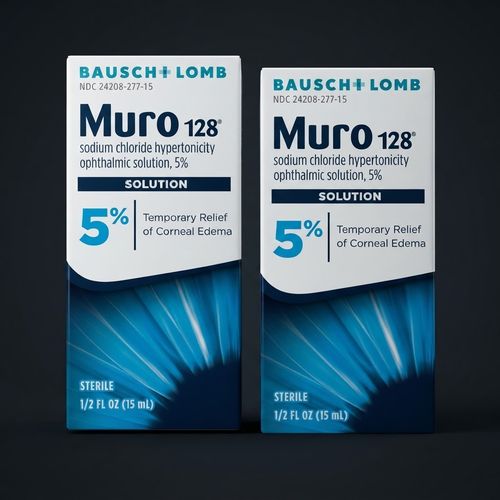
Muro 128 5% Solution 15 mL, pack of two

Muro 128 5% Solution 15 mL, pack of two

4.7 (1,710 reviews)

Running out mid-flare means a pharmacy trip you did not plan, which is what the two-bottle pack prevents: two sterile 15 mL bottles of 5% sodium chloride hypertonicity solution on the shelf at once. Each bottle carries the same strength as the single, so the routine only shifts on the calendar: one 15 mL bottle a month becomes two, at 1 to 2 drops every 3 to 4 hours or as directed. Where one bottle empties in the middle of a post-surgical stretch, the pair carries you through it. Keep the second bottle sealed in the cabinet as the largest daytime format here, and the standard retailer return window still covers the pair; check today's price.

  • Two 15 mL bottles cover a post-surgical stretch without a mid-week reorder
  • Open the second bottle three weeks later and the 5% osmotic pull works exactly as the first one did
  • Where a single bottle empties mid-flare, the pair keeps dosing uninterrupted
Check today's price

How the Saline Works on a Swollen Cornea

Osmosis, the overnight barrier, the day-night split, and the mercury question: what the 5% figure on the carton actually does.

A 15 mL Muro 128 solution bottle held above an open eye at a bathroom sink

Reduce Corneal Swelling Before You Open Your Eyes

Tilt the 15 mL bottle over your lower lid at 7 a.m. and one drop lands on a cornea still holding overnight fluid. Salt at 5% runs saltier than that trapped fluid, so water crosses out of the epithelium within minutes. Blink twice and the haze over your reading glasses starts lifting before the coffee cools. Bausch + Lomb builds the same strength into the bedtime tube, so the pull does not change when you switch after lights out.

  • Keep the bottle on the nightstand and the first drop goes in before you sit up, while the haze is thickest.
  • One drop covers the surface for the 3-to-4-hour stretch the label sets, then you repeat it at your desk.
  • Where a plain lubricating drop wets the surface and evaporates by the next blink, this one moves fluid out of the tissue.
See the 0.5 fl oz solution bottle
A small Muro 128 ointment tube on a bedside table beside a lamp and reading glasses

Stop the Middle-of-the-Night Eyelid-Stuck-to-Cornea Wake-Up

Recurrent corneal erosion tears the epithelium open again when a dry eyelid grips it at 3 a.m. Buyers name an old scratch or epithelial basement membrane dystrophy, the map-dot-fingerprint kind, as where the pattern started. The ointment sits in the lower lid pocket all night and keeps that grip from forming. Take the tube to your next ophthalmology appointment and let your own erosion history set how many nights it runs.

  • Squeeze the ribbon inside the lower lid, close the eye for a minute, and the coat holds until morning.
  • The barrier holds because ointment stays put through the night where a watery drop drains in minutes.
  • Where plain lubricating ointments only wet the surface, this one also pulls fluid from the swollen tissue.
See the 0.125 oz ointment twin pack
A Muro 128 solution bottle beside a keyboard on a daylit desk

Run Drops by Day, Switch to Ointment at Night

The ointment blurs vision for roughly 60 minutes after it goes in, which is why buyers treat it as a lights-out product. The solution carries the same strength with none of that fog, so you keep reading a screen through the afternoon. Reviewers managing Fuchs' endothelial dystrophy describe running both: drops on the label interval, ribbon at bedtime. Your own doctor sets the split that fits your diagnosis.

  • Put the ointment in after you are already in bed; the fog clears by the time you wake.
  • The solution stays readable because a thin aqueous drop spreads and drains instead of coating the cornea.
  • Where an all-day ointment blurs the afternoon, the day-night split keeps your working hours clear.
See the 15 mL solution pair
Hands turning a Muro 128 carton to read the ingredient panel

Skip the Mercury-Compound Question Entirely

Turn the Muro 128 carton over in the pharmacy aisle and the preservative line reads the same on both formats. Run a finger down the inactive list right there: no Thimerosal, the mercury-based preservative still sitting in some older ophthalmic products, appears on either carton Bausch + Lomb prints. Apply a drug four times a day for years and the inactive list starts mattering as much as the active. Read the enclosed insert before the first application, and take any preservative question to your doctor at the next visit.

  • Hand the tube to a pharmacist and the ingredient panel answers the mercury question in one line, before you pay.
  • The same wording holds on every bottle and tube, so a restock six months later reads identically.
  • Where some older eye ointments still list Thimerosal, this panel lists none at all.
See the 3.5 g ointment twin pack

Why the Drops and the Ointment Do Different Jobs

Open the drawer where the 5% drops and the 3.5 g ointment tube sit side by side, and each format answers a different stretch of the 24-hour day.

Stop the 3 A.M. Lid-Stuck Wake-Up

Lay a thin ribbon inside the lower lid at bedtime, and the eyelid glides over the healing epithelium instead of catching it.

Zero Mercury-Based Preservatives, Tube and Bottle

Bausch + Lomb prints "contains no mercurial compounds such as Thimerosal" on the carton, so that question closes before you open the box.

The Same Eye-Care Maker for Over 150 Years

Read the maker's name under the dosing panel: Bausch + Lomb has kept eye-care products on pharmacy shelves for over 150 years.

Drops by Day, Ribbon at Night

Run the solution through your workday at the interval printed on the carton, then switch to the ointment once your reading is done for the night.

Salt Pulls the Water Back Out of the Cornea

Put a drop in at 7 a.m. and the 5% salt, far saltier than corneal tissue, pulls water out until the haze over your screen lifts.

Daytime Drops That Leave Your Screen Readable

The solution keeps your screen readable where the ointment blurs vision for an hour, and the standard retailer return window covers a first bottle that turns out wrong.

The Numbers Other Muro 128 Guides Leave Out

Read the label, the carton, and 22,047 verified reviews together and these figures surface, the ones generic comparisons skip.

3-4 hrs by day, nightly at bed

Set the drops at 3-to-4-hour intervals through the workday, then swap to a bedtime ribbon before lights out, the full 24-hour routine that format explainers stop short of laying out.

Manufacturer label directions

0 mercurial compounds

Squeeze the ribbon straight from the tube without scanning the carton for mercury preservatives, because none enters this formula, the line rival ingredient rundowns leave unanswered until the box is already in your hand.

Manufacturer carton text and product description

Since 1986 (40 years)

Open a tube today and you get the sodium-chloride hypertonicity recipe first mixed in 1958, made by Bausch + Lomb without a break since 1986, a run generic comparisons never put a number on.

Brand history record, Muro Pharmacal Laboratories through Bausch + Lomb

4.7★ / 22,047 reviews

Scroll 22,047 verified buyer reviews and the solution and ointment together hold a 4.7-star weighted average, mostly from people managing edema for months, a count generic hypertonic saline pages rarely publish.

22,047 verified buyer reviews across current products

10+ years

Track one reviewer's timeline and it runs past 10 years of nightly ointment use with no repeat corneal erosion episode, a single account rather than a clinical outcome, and longer than any recurrence-rate table follows one buyer.

Verified buyer review, individual account

0.12 oz (3.4 g) single tube

Start with the 0.12 oz single tube and confirm the nightly ribbon suits you before stepping up to a twin-pack, the trial size cost write-ups skip when they line branded up against generic.

Manufacturer packaging spec

From Morning Drop to Overnight Ribbon

The label sets a 3-to-4-hour daytime interval and a bedtime ribbon, or whatever schedule your own doctor writes for you.

  1. 1

    Start the Day With Drops

    Place 1 to 2 drops in the affected eye after you wake, or as directed.

  2. 2

    Let the Salt Draw

    The 5% saline pulls fluid out of the swollen epithelium over the next minutes.

  3. 3

    Repeat Every 3 to 4 Hours

    Reapply through the workday at the label interval, or on your doctor's schedule.

  4. 4

    Lay the Bedtime Ribbon

    A thin ribbon inside the lower lid coats the cornea through the night.

Ten years of nightly ribbons, in buyers’ own words

Buyer accounts of the sting, the overnight blur, and the mornings that arrive without a catch.

★★★★★Verified Purchase

I have dry eye and my corneas used to stick to the inner lid overnight, then tear on the first blink of the morning. A dab in each eye at bedtime changed that. I have not had an episode in over ten years of nightly use. The blur is real for about an hour, so the tube comes out once I am already under the covers. My ophthalmologist knows I use it and checks the cornea at every visit.

Marilyn K.Muro 128 5% Eye Ointment Twin Pack

★★★★★Verified Purchase

Cataract surgery left fluid in my cornea and the surgeon put me on these drops at the one-week check. Two drops in the morning, two more before lunch, and the haze over my reading glasses thinned inside the first few days. There is a short sting when the drop lands. It settles in a minute or two. Six weeks on, the swelling had gone down and the surgeon tapered me off.

Dwight R.Muro 128 5% Sodium Chloride Solution, 0.5 fl oz

★★★★Verified Purchase

The tube is small, exactly as described. My eye surgeon suggested it to keep my eyes from drying out overnight. It does burn a little going in, and vision stays blurred for close to an hour, so I only use it once I am done reading. Starting with a single tube instead of a pair was the right call for me, and I would tell anyone testing the routine to do the same.

Angela P.Muro 128 5% Eye Ointment, 0.12 oz tube

★★★★★Verified Purchase

Fuchs' dystrophy turns my first hour after waking into fog. A drop before the coffee, and by the time I am at my desk the fog has thinned out. Four years on the same routine now. It does not fix the dystrophy, and my cornea specialist is blunt about that, but it makes the mornings usable. One bottle stays by the bed and the spare rides in the car.

Frank M.Muro 128 5% Solution 15 mL, pack of two

★★★★★Verified Purchase

Thirty years on this ointment and nothing else has matched it. I tried two other lubricating ointments when a pharmacy counter ran out, and both had drained off by 2 a.m. This one is still there in the morning. The routine has not changed since the 1990s: one dab per eye, lights off, done.

Roberta S.Muro 128 5% Eye Ointment Twin Pack

★★★★Verified Purchase

My doctor advised these for swelling of the cornea and I have used them a long while. It helps. It burns for a few minutes and then it is fine. Taking the two-bottle pack means I am not hunting a refill in the middle of a flare, which used to happen to me every couple of months.

Curtis H.Muro 128 5% Solution 15 mL, pack of two

★★★★★Verified Purchase

Sjogren's plus corneal dystrophy here. The ointment goes in nightly. I stopped for a stretch last winter and both my corneas and my vision suffered for it, so I went straight back. The larger tubes carry me deep into a season instead of running dry every six weeks. Keep the eye closed a couple of minutes after the ribbon goes in so it melts properly.

Nadine T.Muro 128 5% Corneal Edema Ointment, 0.25 oz pair

★★★★★Verified Purchase

My optometrist recommended this when my eyes felt heavy and watered all day long. The difference showed inside the first week: far less fatigue by the afternoon, and the constant tearing stopped. He warned me about the sting up front, which I appreciated, because it is noticeable for a moment and then gone. One drop in each eye first thing every morning.

Peter L.Muro 128 5% Sodium Chloride Solution, 0.5 fl oz

Muro 128 solution bottle and ointment tube on a bedside nightstand

The Salt Formula Behind the Bedtime Ribbon

Two formats cover the full day. You place 1 to 2 drops of the 5% sodium chloride solution every 3 to 4 hours, or as your doctor directs. At bedtime a thin ribbon of ointment goes inside the lower lid. Your eyelid then slides free of the cornea at 3 a.m. instead of tearing at it.

Corneal erosion that recurs does not end with one good night: buyers describe restocking the same 0.12 oz tube in March and again in July. Pick up a tube today and you hold a sodium-chloride hypertonicity formula first mixed in 1958 at Muro Pharmacal Laboratories, made by Bausch + Lomb without a break since 1986. Read the carton beside any comparison page and one line narrows everything: the FDA OTC monograph permits temporary relief of corneal edema, and nothing wider.

A verified reviewer managing dry eye and nightly corneal sticking describes 10 years of the bedtime ribbon without a repeat episode, after other lubricating ointments failed. That is one person's eye history, not a result you should expect. Switch from the daytime bottle to the bedtime tube and the strength stays at 5%, so only the vehicle changes. Carry both to your ophthalmologist and let that appointment set which one you run, and on what interval.

For plain daytime dryness with no swelling, reach for preservative-free artificial tears instead, since this salt formula is built for edema. You keep the bottle for the days your vision fogs and the tube for the nights your lid catches, or whatever split your doctor writes.

What we build and why →

What Buyers Worry About Before the First Tube

The sting, the blur, the edge of the label: what buyers weigh before the first 15 mL bottle goes into a cart.

The 3 A.M. Wake-Up That Reopens the Tear

Recurrent corneal erosion peaks when a dry lid grips the healing epithelium and tears it loose on the first blink of the morning. Lay a thin ribbon along the lower lid at bedtime and it stays between those two surfaces through the night. Bring the pattern of your wake-ups to your ophthalmologist, since your erosion history drives the schedule more than any tube does.

The Sting Nobody Warns You About in Advance

Buyers report a brief sting on application that settles within a few minutes, and one reviewer lays down a lubricating drop first to blunt it. That detail comes from buyer reviews, not from label warning text. If the burning runs past those first minutes on any night of the week, tell your doctor.

Artificial Tears Already Sit in the Same Drawer

Reach into the drawer at 9 p.m. and the two bottles look alike: preservative-free artificial tears wet the surface, while hypertonic saline pulls fluid out of swollen tissue. Reviewers managing Sjogren's dry eye alongside a corneal diagnosis keep both on the shelf and reach for each on different nights. This formula does not replace daily lubricating drops for plain dryness, so ask which one your diagnosis calls for at the next visit.

Keratoconus and Graft Failure Sit Outside This Label

Sit down for a keratoconus or graft-failure consult and this label never enters the conversation, because those cases need surgical evaluation. The FDA OTC monograph here covers temporary relief of corneal edema and stops at that line. An ophthalmologist decides those cases in the exam chair, not an over-the-counter tube pulled off a shelf.

Ordering the Wrong Format for Your Routine

Open an ointment tube at 8 a.m. and you lose an hour of clear vision; run drops overnight and they drain long before you wake. Start with a single tube or the 0.5 fl oz bottle rather than a twin-pack, and give the routine a week. The standard retailer return window covers a first order that turns out wrong.

Two formats, one active ingredient, and a standard retailer return window on a first order — compare drops and ointment.

Expert Pick: One Configuration to Start With

Where an optometrist would start a first-time buyer: the 0.5 fl oz daytime bottle, the smallest ointment tube, a doctor-set interval.

Composite Optometrist View

Ophthalmic dispensing perspective, not an individual practitioner

A first-time buyer stands at the counter holding both formats and asks which one to take home, when most routines end up using both anyway. Run the 0.5 fl oz solution through the working day at the interval printed on the carton. Save the ointment for after lights out, where an hour of blur costs you nothing. Neither one treats the condition underneath the swelling, and neither replaces the appointment where your own doctor sets the interval.

Expert perspective: a composite view reflecting industry practice, and individual experiences vary.

  • Run the solution through the day and switch to the ribbon at bedtime, the split most reviewers settle into after the first month.
  • Start with the smallest ointment tube rather than a twin-pack, and confirm the nightly routine fits while the standard retailer return window still applies.
  • Follow the label's 3-to-4-hour interval, or whatever your own doctor sets at the next visit, since that adjustment is a medical decision.

Where a first-time buyer starts

  • the 0.5 fl oz solution bottle for daytime dosing
  • the smallest single ointment tube for the first bedtime week

Day 1 to Year One on the Bedtime Ribbon

Day 1 through year one under label-directed dosing: what the first night, the first month, and a long nightly run look like.

  1. Day 1, bedtime

    Twist the cap off the single ointment tube, lay a thin ribbon inside the lower lid, and close your eyes for a minute. Vision fogs for about an hour, so do this once you are already in bed. If the format turns out wrong for you, the standard retailer return window applies.

  2. Week 1

    By the fourth or fifth night you stop guessing at ribbon length, and the first blink of the morning arrives without the catch that used to wake you at 3 a.m.

  3. Month 1

    The first tube runs out and you choose between the twin-pack and the larger 0.25 oz size. Buyers running the daytime drops tend to keep a solution bottle going alongside it.

  4. Year one and beyond

    By month twelve the ribbon is either part of your night or it is not, and that call belongs to the ophthalmologist reading your cornea. Bring the tube to the appointment so the label directions get read against your current diagnosis.

Ready for Day 1? Start with the 0.12 oz single ointment tube and compare it against the twin pack.

Who the Hypertonic Saline Line Was Sized For

Diagnosed corneal edema, recurrent erosion, post-cataract swelling, and Fuchs' dystrophy: the eye histories buyers bring to 5% saline.

The Patient Taping Their Eyes Shut Every Night for RCE

Tape, seals, and a sleep mask have all been tried, and the lid still finds the cornea by 3 a.m. The bedtime ribbon goes under all of it. Your ophthalmologist decides whether hypertonic saline belongs in that stack.

Managing Corneal Swelling in the Weeks After Cataract Surgery

Your surgeon flags fluid in the cornea at the one-week check and mentions hypertonic saline. Buyers in that window describe running drops through the day for a few weeks, at whatever interval the surgeon writes. If a bandage contact lens is still in place, ask the surgeon before you add anything to that eye.

Living With Fuchs' Endothelial Dystrophy and Morning Haze

Vision fogs worst in the first hour after waking, then clears as the day goes on. Give it that hour by the window and the haze thins as the back layer of the cornea clears the fluid it collected overnight. Reviewers with the diagnosis describe drops on waking and the ribbon at night, on a schedule their own doctor set.

Still Searching for a Bedtime Barrier That Holds Past 3 A.M.

Plain lubricating ointments drain off before morning and the catch comes back. One reviewer switched to the salt ribbon and reports a decade without a repeat episode, though that remains a single account.

Where this bottle is the wrong answer

  • Reach for preservative-free artificial tears instead if plain daytime dryness with no corneal swelling is what has you standing in the aisle, because hypertonic saline does not replace them.
  • Skip this if a keratoconus diagnosis or a failing corneal graft is what sent you searching at 2 a.m., since those need a surgical evaluation from an ophthalmologist rather than an over-the-counter tube.
  • Not a fit for a tube that would sit in a child's bathroom cabinet, or your own, before a doctor has weighed hypertonic saline against that diagnosis.

Dosing, sting, storage, and the edge of the label

Answers on the daytime interval, the burn, the overnight blur, and where the monograph claim stops.

What does Muro 128 do for your eyes?

The 5% sodium chloride draws excess fluid out of a swollen cornea by osmosis, which the FDA OTC monograph describes as temporary relief of corneal edema. That is the entire approved claim. It is not a lubricating tear, and it does not treat whatever condition is causing the swelling underneath. Your eye doctor decides whether it fits your diagnosis.

Is it sold over the counter, or does it need a prescription?

Both the solution and the ointment sell over the counter as FDA OTC monograph drugs. No prescription is required, though most buyers arrive after an optometrist or ophthalmologist named the format for them. Read the enclosed insert before the first application and follow whatever interval your doctor sets.

What is hypertonic saline, and why 5 percent?

Hypertonic means saltier than the fluid in the tissue it touches. At 5% sodium chloride the solution and ointment run far saltier than corneal tissue, so water moves out of the swollen epithelium toward the drop. Ordinary saline sits near 0.9% and creates no such gradient.

Who manufactures the brand?

Bausch + Lomb manufactures the line and has done so since 1986. The formula came from Muro Pharmacal Laboratories, which first mixed the sodium-chloride hypertonicity recipe in 1958. Cartons list Bausch + Lomb as the manufacturer. Some older packaging carries Valeant Pharmaceuticals-era model numbers from the same production line, which is why a tube in your drawer may not match the newest carton art.

What is the difference between the drops and the ointment?

Drops spread thin and clear quickly, which is why they carry the daytime load at 1 to 2 drops every 3 to 4 hours. The ointment coats the cornea and holds through the night, at the cost of roughly an hour of blurred vision after each application. Both formats carry the same 5% strength.

Is this the same as regular sodium chloride saline?

Regular saline sits at 0.9%, matched to body fluid, and does nothing osmotically to a swollen cornea. The 5% concentration is the whole point, because it pulls fluid across the epithelium. Rinse saline and contact-lens soaking saline are not substitutes.

Is the formula preservative-free?

Preservative-free is not the claim on this carton. What Bausch + Lomb states is that the formulation contains no mercurial compounds such as Thimerosal. If you need a fully preservative-free product because of a known sensitivity, ask your doctor to check the current insert against your needs before you buy.

What is the active ingredient?

Sodium chloride at 5% hypertonicity, in the solution and in the ointment alike. Nothing else does the osmotic work. The strength is printed on the front of every carton, so a quick check tells you whether a tube on a shelf is the 5% formula or a lower-concentration product.

How often should the drops be used?

Label directions call for 1 to 2 drops in the affected eye every 3 to 4 hours, or as directed by your doctor. Buyers managing post-surgical swelling often run tighter intervals for a few weeks on a surgeon's instruction. The interval on the carton is a starting point, not a ceiling your doctor cannot change.

How is the ointment applied?

Label directions call for 1 to 2 drops in the affected eye every 3 to 4 hours, or as directed by your doctor. Buyers managing post-cataract swelling often run tighter intervals for a few weeks on a surgeon's instruction, and reviewers with Fuchs' dystrophy describe four doses a day spread across waking hours. The interval printed on the carton is a starting point, not a ceiling your own doctor cannot move. Write down what you actually use each day and bring that record to your next appointment, because the interval is easier to adjust when the exam has real numbers behind it.

What sizes does the solution come in?

A sterile 0.5 fl oz (15 mL) bottle, sold on its own or as a two-bottle pack. Both carry identical 5% strength, so the choice is about how long you go between reorders.

What ointment tube sizes exist?

Tubes run from a 0.12 oz single up through 0.25 oz, with twin-packs at 0.125 oz each and at 3.5 g each. Strength stays the same across all of them. The smaller tube works as a trial, the larger pairs as the restock once a nightly routine settles.

Still deciding between the bottle and the tube? Compare drops and ointment side by side.

Stay Ahead of the Restock

Get the Muro 128 Format & Dosing Guide plus back-in-stock alerts for the solution and the ointment.

No spam. Unsubscribe anytime.